Ingredients, Explained One By One
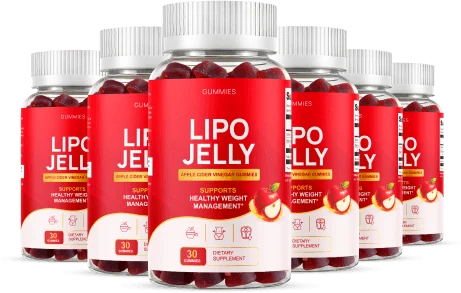
LipoJelly Gummies lists six ingredients: apple cider vinegar, glycine, alanine, green tea extract, collagen with vitamin C, and turmeric with piperine.
Each ingredient's role is stated plainly, and we link the real research behind the ones that have it, rather than repeating marketing claims.
Six ingredients, six stated roles
Every ingredient in LipoJelly Gummies is printed on the label with its intended purpose. What's not published anywhere we could find is the exact milligram amount of each — the role is transparent, the precise dosing is not, which is fairly typical for this product category.
Going through all six
Apple Cider Vinegar
The base of the whole formula. Its main active compound, acetic acid, has published research pointing to modest support for blood sugar levels already in a normal range, along with some appetite-signaling effects. Modest, not dramatic, is the honest read of the evidence here.
Glycine
The most abundant amino acid in gelatin. It's been studied for roles in glutathione production, collagen synthesis, and gut-hormone signaling, with some research pointing to a possible role in glucose metabolism — though human data at food-derived doses is still preliminary.
Alanine
Participates in the glucose-alanine cycle in the liver, a process studied in blood sugar regulation, especially around protein-rich meals.
Japanese Green Tea Extract (EGCG)
Among the most researched polyphenols in nutrition science. A 2009 meta-analysis in the American Journal of Clinical Nutrition (Hursel et al.) found green tea catechins produced a small but statistically real reduction in body weight versus placebo — measured in single-digit pounds over months, not a dramatic transformation.
Hydrolyzed Collagen + Vitamin C
Collagen has a legitimate track record for skin hydration and elasticity, and vitamin C is a required cofactor your body needs to synthesize its own collagen. Genuinely relevant during a period of weight change, when skin elasticity often becomes a concern.
Turmeric + Piperine
Curcumin, turmeric's active compound, has a substantial anti-inflammatory research base but is notoriously poorly absorbed on its own. Piperine changes that math significantly: the widely cited Shoba et al. study in Planta Medica (1998) found it increases curcumin absorption by roughly 2,000% in humans.
A quick word on interactions
Piperine specifically can affect how your body metabolizes certain medications, since it influences liver enzymes involved in drug processing. If you take any prescription medication, it's worth a quick check with a pharmacist or doctor before adding this in.
Next, see how this compares to prescription options.